
When Rhonda Jordan began her career, she imagined herself in retail, climbing the ranks to become a buyer for a major brand. But a frank conversation with a district director about the racial barriers she'd face changed her course—and ultimately steered her into a career that would give her the power to break down those barriers for others.
Now the chief human resources officer at Virtua Health, a New Jersey–based health system, Jordan has spent nearly three decades championing workforce development, diversity and employee well-being. Her journey to the C-suite wasn't linear, but it was driven by one constant: a deep belief in the power of people.
"I'm not your traditional HR person," Jordan told Newsweek.
Originally from Texas, Jordan earned her degree in marketing and pursued a career in retail management. She went into an executive development program with plans to climb the corporate ladder but eventually realized that none of the people who were receiving promotions looked like her.
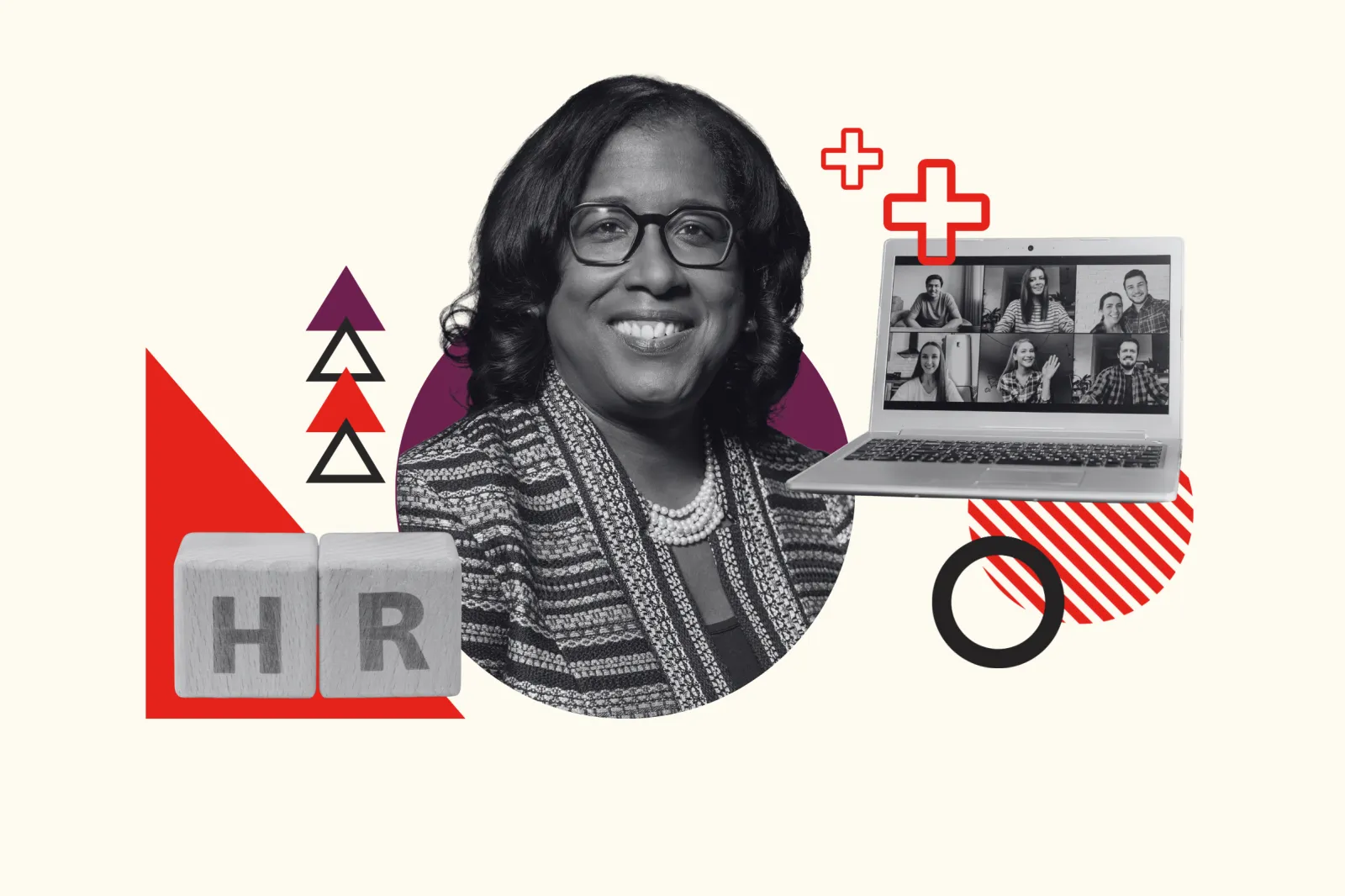
"I went to my district director and said, 'Well, what is it going to take for me?'" Jordan recalled. "She told me that because I was Black, it was going to take me longer."
That conversation dulled Jordan's outlook on the retail industry, but it didn't dull her ambition. She realized that her skill set could be transferred to recruiting—a move that ultimately brought her to Children's Hospital of Philadelphia. There, a supportive female leader saw her potential, mentoring her into a leadership role.
She joined Virtua in the 1990s as a director of HR, steadily rising through the ranks before becoming CHRO in 2013. Along the way, she collected not only new titles but a deeper understanding of how inclusive leadership can transform organizations.
Jordan credits much of Virtua's success to a culture of inclusion modeled by its CEO, Dennis Pullin, and embraced across all levels of leadership.
"Our CEO is outstanding in creating an inclusive environment, and he ensures that every voice gets heard," Jordan said. "He pauses to allow individuals to ask questions. He will call on you if he hasn't heard from you, because it's so important to hear your voice."
Under Jordan's leadership—with support from others on the executive team, including Pullin—Virtua has set itself apart in a competitive health care talent market. The health system recently landed on Newsweek's ranking of America's Greatest Workplaces 2025 with a perfect five-star score.
It has also been recognized by Press Ganey (a data and technology company that partners with 41,000 health care providers) for an exceptional "culture of belonging." In 2019, Virtua acquired Lourdes Health System, and the following year, it provided care throughout the challenging COVID-19 pandemic. Despite the turbulence, 88 percent of Virtua employees reported "feeling like a part of [the] organization," even when working from home. That score well outperforms Press Ganey's national average.
Virtua's mission to diversify its leadership has helped foster its strong culture, according to Jordan. The system holds annual talent reviews to identify and support high-potential, diverse employees—and it shows in the numbers. Virtua has instituted bylaws to ensure that its board of trustees reflects the demographics of its patient population, and more than half of its senior leaders are women.
That's a rare achievement in the health care industry. Women compose nearly 70 percent of the global health care workforce but hold less than a quarter of the sector's leadership roles.
"Health care is a female-dominated profession, and it was only in some of those higher [leadership] levels that you might not have seen the females," Jordan said. "That is not the case at Virtua. We continue to foster and promote diverse talent as well as women talent."
Jordan's people-first approach isn't limited to executives. One of her top priorities is ensuring that every employee sees a path forward, from emergency medical technicians (EMTs) to lab techs to janitors. That means investing in training, education partnerships and internal mobility.
Virtua's workforce development director works to identify roles with high turnover or shortages. Then, the system funds employees' educations to advance them into those areas of need. Examples include a pathway from EMT to paramedic to registered nurse and a lab program that starts with phlebotomy and leads to medical laboratory science. The system also launched its own staffing agency and partnered with Rowan University to funnel nursing graduates into a bachelor's program.
Additionally, Jordan leads initiatives like the career ambassador program, which matches employees with colleagues in roles they aspire to. Many participants have gone on to new jobs or promotions within the system.
"When staff can see people look like them, they perform," Jordan said. "Productivity increases, retention increases—but you have to make [diverse representation] a focus and a priority for your organization."
Jordan has prioritized not only professional development but colleague well-being. Through the WE Thrive initiative, Virtua offers resources spanning mental health, peer support, physical wellness activities and even emergency financial aid.
The system's colleague communities continue to foster connection and mentorship, even outside of the workplace. Jordan serves as the executive ambassador for the Black and African American Colleague Community group, which recently hosted a career development session attended by more than 50 staff members.
Her leadership style blends approachability with resolve, which she says has helped her succeed where some predecessors didn't.
"Don't see the softness in who I am as a weakness," Jordan said. "There's strength behind that softness."
She strives to be calm in chaos, consistent in demeanor and fiercely committed to listening. When she first stepped into the CHRO role, she sought out an executive coach from outside of health care—a male, former CHRO—to make sure she was equipped but didn't lose her sense of self.
Despite what she was told in the early days of her career, "I did not have to change who I was," Jordan said. "You can be who you are and still continue to have an impact."
Outside of work, Jordan finds joy in her family—especially her young granddaughter, who calls her "Gigi"—and in her longtime membership in Alpha Kappa Alpha Sorority, where she has continued her commitment to service and sisterhood since college.
"The sorority became my extended family when I first moved to New Jersey with no family whatsoever," she said. "I'm in health care because we serve, and I want to make sure that I'm giving back to my community. I do that through my sorority as well."
Whether at Virtua Health or in her social circles, Jordan is a leader who doesn't accept limits on herself or others. It's a skill that pushes everyone in her orbit to be the best, most authentic version of themselves—and to not view those terms as mutually exclusive.
Jordan will join Newsweek at this year's inaugural Women's Global Impact forum. The August 5 event, hosted at Newsweek's headquarters in New York City, will bring together some of the world's top female executives and connect them with rising stars across industries and job functions.
For more information on the event, please visit the Women's Global Impact homepage.